Navigating New Urban Development Regulations
If you own property in an urban area, it probably feels like the rules have…

Liberty InvestmentsNovember 19, 2025

Emerging Trends in Urban Real Estate Development
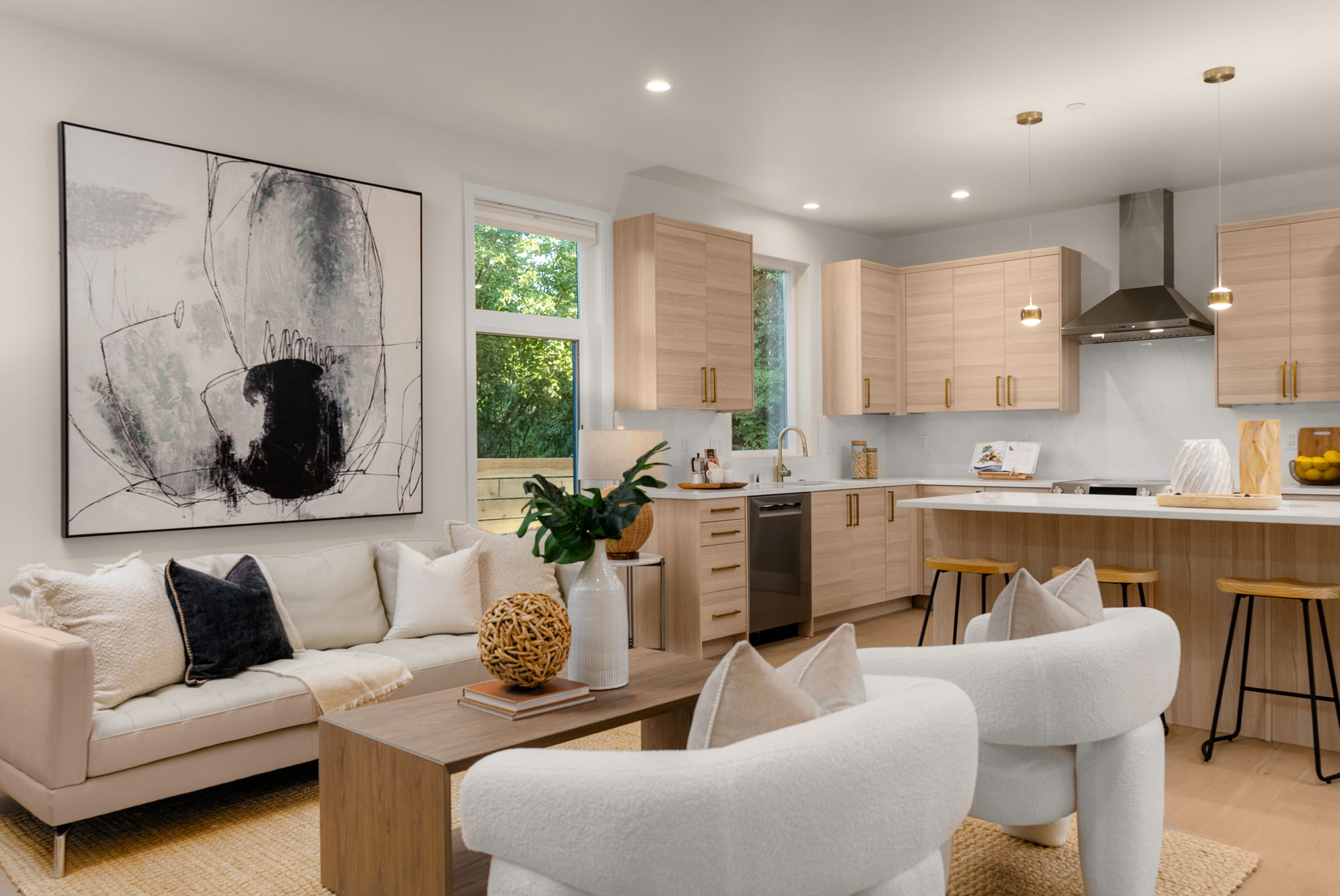
What we’re actually seeing on the ground in places like Seattle, Bellevue, and Kirkland. Urban real estate development is changing, but not in the way most headlines make it sound. What’s happening isn’t about flashy new towers or sweeping reinventions of cities overnight. It’s quieter than that. More incremental. And in many ways, more practical.
Across Western Washington, especially in cities like Seattle, Kirkland, Redmond, Everett, and Bellevue, we’re seeing a shift toward development that prioritizes flexibility, long-term ownership, and making better use of land that’s already built on. Here are a few of the trends that actually matter right now, based on what we’re seeing in real projects.
For decades, urban housing was treated like a binary choice: single-family homes on one end, large apartment buildings on the other.
That gap in the middle is finally being addressed.
Middle housing, duplexes, triplexes, fourplexes, cottage housing, ADUs, and townhomes, is becoming a real focus across the Puget Sound. Not because it’s trendy, but because it fits how people actually live.
These housing types:
In cities like Seattle and Shoreline, we’re seeing more interest in adding units to existing lots rather than assembling multiple parcels or tearing down entire blocks. It’s a more surgical approach to density.
One of the bigger shifts we’ve noticed is who is driving development decisions.
It’s no longer just institutional investors or large builders. More homeowners and long-time property owners are exploring development as a way to:
That’s changing how projects are structured. Instead of joint ventures or equity partnerships, many owners want control. They want to understand their options first, then decide whether to build, sell, rent, or do a combination of all three.
This trend is especially common in places like Snohomish County and South King County, where families have owned property for decades and are just now realizing what zoning and market demand might allow.
Recent zoning changes have made more development possible, but they haven’t made it simple.
One of the biggest misconceptions we see is the idea that zoning approval equals feasibility. In reality, zoning is just the starting point.
What’s shaping projects today:
Developers who succeed in today’s urban environment are spending more time upfront—before design, before permits—figuring out what actually pencils.
That front-end work isn’t glamorous, but it’s becoming one of the most important trends in urban development.
Another noticeable shift is scale.
Instead of large, all-or-nothing projects, many urban developments are being broken into smaller phases. A homeowner might:
This approach reduces risk and allows decisions to be made over time instead of all at once. It’s especially appealing in markets like Bellevue, Kirkland, and Issaquah, where land values are high and mistakes are expensive.
Phased development also aligns better with how most property owners think. They’re not trying to become full-time developers. They just want smart options.
Urban buyers and renters are paying closer attention to livability.
We’re seeing less emphasis on excess square footage and more focus on:
Infill projects that respect the neighborhood tend to perform better over the long term. That doesn’t mean copying old styles—but it does mean designing with context in mind.
In places like Edmonds and Bothell, the projects that succeed are usually the ones that don’t scream “new development” from the street.
Finally, one of the most important trends isn’t physical at all. It’s psychological.
More property owners are moving away from trying to “time the market” and instead focusing on control and optionality. They want plans that still make sense if:
That’s leading to development strategies that prioritize flexibility over maximum yield. Sometimes that means fewer units. Sometimes it means holding rentals instead of selling. And sometimes it means not building at all.
That kind of restraint is becoming a competitive advantage.
Urban real estate development in the Puget Sound isn’t about dramatic change. It’s about better decisions.
More owners are asking smarter questions earlier. More projects are being tailored to real-life needs instead of abstract pro formas. And more development is happening within existing neighborhoods, rather than replacing them.
The common thread across all of these trends is clarity.
The developers and property owners who do well in this environment aren’t the ones chasing headlines. They’re the ones who understand their land, their constraints, and their options—before they commit.
And that’s likely where urban development continues to head: quieter, more thoughtful, and more owner-driven.
Ready to Unlock your Property’s Potential?
Every property has a story waiting to be developed. Let us help you write yours.
Join our newsletter to stay up to date on features and releases.
Follow us
Follow us
© 2025 Liberty Investments. All rights reserved.